Introduction
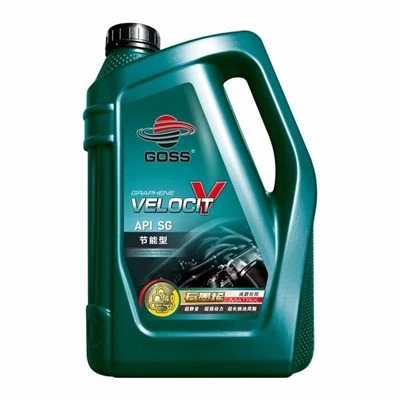
For over a century, vehicle ownership has been accompanied by a deeply rooted culture of routine maintenance. Drivers often develop an emotional connection to their vehicles, viewing regular garage service as a vital ritual to protect their high-value investments. At the center of this maintenance routine is the fluid change-specifically, replacing the engine oil. Because the internal combustion engine operates under intense pressures and thermal loads, the choice and maintenance of an automotive lubricant directly dictate whether a vehicle will achieve a long, healthy operational lifespan or suffer a sudden, catastrophic mechanical failure.
However, because automotive technology has evolved at a breakneck pace over the past two decades, consumer folklore has struggled to keep up. The automotive landscape is currently saturated with persistent myths, outdated beliefs, and old-school mechanic advice that may have been true in the 1970s or 1980s but is flatly incorrect today. Adhering to these legacy misconceptions does more than just drain a consumer's wallet through unnecessary service intervals; it can actively cause engine wear, harm fuel efficiency, and generate millions of gallons of avoidable chemical waste. This article provides an in-depth, scientifically grounded analysis that debunks the most common myths surrounding automotive lubricants, replacing outdated folklore with modern chemical engineering and physics.
Myth 1: The Outdated 3,000-Mile Oil Change Interval
Perhaps the most persistent myth in the entire automotive ecosystem is the unyielding belief that a vehicle's engine oil must be changed every 3,000 miles or three months without exception. This rule was heavily commercialized by quick-lube service stations for decades, successfully embedding itself into the collective consciousness of drivers worldwide. While this was a highly valid safety threshold in the mid-20th century, applying it to a modern vehicle is a massive waste of time, money, and natural resources.
The 3,000-mile rule was born during an era dominated by crude mineral oils and mechanically primitive carbureted engines. Early mineral oils possessed low chemical stability and were highly vulnerable to rapid thermal oxidation. Furthermore, older engines regularly suffered from poor fuel atomization, allowing unburned raw gasoline to seep past the piston rings and dilute the oil pan, rapidly breaking down the fluid's viscosity. Under those primitive conditions, running an oil past 3,000 miles risked severe sludge accumulation and bearing wear.
Today, both engine design and lubricant manufacturing have undergone a total technological revolution. Modern passenger car motor oils are primarily formulated using Group II hydrocracked or Group III/IV fully synthetic base stocks. These advanced fluids feature uniform molecular structures engineered to withstand continuous high temperatures without breaking down. Combined with highly resilient polymer additives, modern oils can easily maintain their protective qualities for 7,500 miles, 10,000 miles, and in some advanced formulations, up to 15,000 miles or a full year under normal driving conditions.
Furthermore, drivers no longer need to rely on arbitrary odometer readings. Modern vehicles are equipped with intelligent Oil Life Monitoring Systems (OLMS). Rather than just counting miles, these digital systems utilize advanced powertrain control algorithms to track real-world variables, including engine operating temperatures, cold-start frequencies, idle times, and driving habits. If a driver spends their time cruising smoothly at highway speeds, the OLMS will automatically extend the service interval because the thermal stress on the fluid is minimal. Conversely, if the vehicle is used for short, stop-and-go city trips in freezing weather, the system will adjust and trigger an earlier oil change alert. Following the vehicle's onboard computer rather than a rigid 3,000-mile calendar ensures maximum engine safety while cutting out unnecessary maintenance overhead.
Myth 2: Once You Switch to Synthetic, You Can Never Go Back
A terrifying warning frequently passed down by legacy mechanics is that once a driver switches their engine over to a full synthetic oil, they are permanently locked into that choice. The folklore states that synthetic oil alters the internal chemistry of the engine seals, and attempting to switch back to a standard mineral oil later will cause the gaskets to shrivel up, harden, and manifest severe, unfixable oil leaks across the engine block.
To understand the origin of this myth, one must examine the history of early synthetic lubricants introduced in the 1970s. When first-generation full synthetics were developed, they relied heavily on pure polyalphaolefin (PAO) base fluids. While these early synthetics delivered spectacular low-temperature flow and high-temperature stability, chemical engineers quickly discovered an unforeseen side effect: raw PAO caused the elastomer seals and gaskets used in engines at the time to slightly shrink and lose elasticity. In older engines already packed with microscopic wear gaps, this shrinkage resulted in real, highly publicized oil leaks.
However, the lubricant industry addressed this issue decades ago. Modern automotive lubricants are highly complex, balanced chemical mixtures. Today, if a manufacturer utilizes a PAO base fluid, they blend it with a precise percentage of synthetic ester base oils. Esters possess a natural physical characteristic that causes elastomer seals to slightly swell and soften. By precisely balancing PAOs and esters, modern synthetic oil achieves a perfectly neutral effect on engine seals, maintaining their original dimensions and flexibility exactly like mineral oil.
Because of this modern formulation safety, all passenger car motor oils are fully miscible and chemically compatible. A driver can seamlessly transition from mineral oil to semi-synthetic, step up to a full synthetic, and drop back down to a conventional mineral oil at the next oil change without any adverse chemical reactions or mechanical risks. In fact, standard synthetic blend oils sold on retail shelves are nothing more than a factory-mixed combination of mineral and synthetic base oils. While sticking to a high-quality synthetic is ideal for maximum protection, the belief that a single fill permanently alters the engine's internal compatibility is entirely false.
Myth 3: Thicker Oil Always Provides Better Engine Protection
There is a deeply embedded belief among old-school automotive enthusiasts that "thicker is better" when it comes to engine oil. This legacy mindset dictates that a heavy, viscous oil-such as a 10W-40 or 20W-50 grade-creates a thick, impenetrable cushion of fluid that offers superior protection against mechanical wear compared to a thin, watery fluid. Consequently, many drivers assume that switching to a thicker oil than what the owner's manual specifies is a smart way to extra-protect their engine.
This logic completely falls apart when applied to modern engine architecture. In past decades, internal combustion engines were built with relatively loose mechanical clearances between moving parts, such as the gap between the crankshaft and the main bearings. These wider spatial clearances required a heavy fluid to physically bridge the gap and maintain a dynamic oil film.
Modern engines, by contrast, are designed with extreme precision, utilizing micro-tolerances and mirror-polished metal surfaces where clearances are incredibly narrow. To flow smoothly through these tight spaces, the engine requires a highly fluid, low-viscosity automotive lubricant, such as a 0W-20, 0W-16, or even a 0W-8 grade.
If a driver installs a heavy 20W-50 oil into a modern engine designed for a 0W-20 fluid, the results can be quietly devastating. During a cold start on a winter morning, the heavy oil will move through the system like thick sludge. Because the internal oil passages and bearing clearances are so narrow, the viscous oil will experience a severe delay in circulation, leaving the valvetrain and pistons completely starved of lubrication during those critical first few minutes of operation-the exact period where over 70% of all engine wear occurs.
Additionally, an overly thick oil generates immense internal fluid drag, forcing the engine's oil pump and moving components to work significantly harder. This structural resistance generates excess internal heat, drops oil pressure downstream due to flow restriction, and heavily degrades the vehicle's fuel efficiency. Modern thin oils are specifically engineered with highly advanced polar anti-wear additives that form a ultra-strong chemical shield on metal surfaces, allowing a thin fluid film to provide spectacular wear protection while maximizing mechanical efficiency.
Myth 4: Black Oil Indicates It Is Defective and Needs Immediate Replacement
It is common practice for drivers to occasionally pull out their engine's dipstick to check the status of the oil. Upon pulling the stick and seeing that the fluid has turned from a clear, golden-amber hue into a dark, charcoal-black color, many owners immediately panic. They assume that the black color is an undeniable sign that the oil has completely broken down, burned out, or become contaminated, necessitating an immediate emergency oil change.
This visual assessment is a complete misinterpretation of fluid dynamics. In reality, engine oil turning black is a clear indication that the automotive lubricant is doing its job perfectly.
When an internal combustion engine runs, the process of burning gasoline or diesel fuel inevitably generates microscopic carbon soot particles, along with airborne dirt, moisture, and varnish precursors. If these carbon contaminants are left to roam freely within the engine, they will naturally cluster together, binding to hot metal components to form a heavy, baked-on black sludge that clogs oil passages and restricts cooling.
To prevent this internal destruction, modern engine oils are packed with highly active detergent and dispersant additives. The detergent molecules scrub the internal metal surfaces clean, while the dispersant molecules act as microscopic chemical claws that wrap around every individual carbon soot particle the moment it enters the oil body. The dispersants hold these microscopic particles in a state of continuous suspension, preventing them from grouping together or settling onto engine surfaces. Because these millions of tiny carbon particles are safely suspended throughout the fluid, they scatter light, causing the entire oil body to turn dark black. The oil can be pitch black while still possessing 100% of its original lubricating capabilities and viscosity parameters. Conversely, if an oil remains perfectly clean and golden after several thousand miles of heavy driving, it actually indicates a dangerous additive failure: the dispersants are failing to lift the soot, meaning the carbon is actively settling inside the engine as destructive sludge.
Myth 5: Aftermarket Oil Additives Are Necessary to Boost Performance
A multi-million-dollar sub-industry exists solely to market over-the-counter oil stabilizers, treatments, and performance boosters. These bottled fluids are aggressively marketed through retail auto parts stores, claiming that pouring their proprietary mixture into your oil fill cap will increase horsepower, eliminate internal friction, quiet noisy valves, and double the lifespan of your engine.
From the perspective of a chemical engineer, adding an over-the-counter aftermarket additive to a high-quality name-brand engine oil is one of the most hazardous choices a vehicle owner can make. Modern automotive lubricants are not simple baseline liquids; they are highly complex, delicately balanced chemical systems. Every premium oil bottle contains a precisely engineered balance of base stocks mixed with a multi-million-dollar additive package containing precise, balanced ratios of anti-wear agents, friction modifiers, detergents, dispersants, defoamers, and pour-point depressants.
When a consumer pours a bottle of generic aftermarket additive into the crankcase, they disrupt this delicate chemical equilibrium. Additives operate on the principle of competitive surface chemical reactions. If a foreign, aggressive chemical is introduced, it can literally fight with the oil's factory additives for position on the engine's metal surfaces. This phenomenon, known as "additive clashing," can cause the factory anti-wear agents to be knocked out of suspension, completely neutralizing their protective capabilities.
Furthermore, many popular aftermarket oil treatments are nothing more than highly viscous base oils with no active detergents. Pouring them into your engine simply inflates the overall viscosity, recreating the dangerous fluid flow delays during cold starts discussed in Myth 3. Premium name-brand oils already contain all the cutting-edge chemical technology an engine needs to survive. Introducing third-party additives can accelerate oil oxidation, trigger rapid sludge formation, clog fine oil filters, and instantly void new car factory warranties.
Conclusion
Navigating the maintenance of a modern vehicle requires a clear separation between historical automotive folklore and contemporary chemical reality. As internal combustion engines have advanced into ultra-efficient machines characterized by micro-clearances, variable valve timing, and high-pressure turbocharging, the fluids that protect them have undergone an equally dramatic evolution.
The widespread beliefs that oil must be changed every 3,000 miles, that switching back and forth between synthetic and mineral oil causes engine leaks, or that a thick oil is universally safer are obsolete notions left over from a bygone era of automotive design. Similarly, viewing dark-colored oil as ruined or assuming that a premium automotive lubricant requires a boost from a retail aftermarket additive bottle ignores the precision science that defines modern fluid engineering.
Ultimately, the key to maximizing vehicle reliability while avoiding unnecessary maintenance expenses is simple: abandon old-school folklore and strictly follow the data-driven guidelines provided by the vehicle's Original Equipment Manufacturer (OEM). By matching your engine's specific architecture with the exact viscosity grade, compliance standard, and oil-life tracking system outlined in the owner's manual, you ensure that your vehicle remains safe, highly efficient, and structurally secure for its entire operational lifecycle.